Showing posts with label International Security. Show all posts

Sunday, 12 June 2016

Industrial Development – China and Africa IGC Public Discussion at the LSE: What Was Said

"You can learn from anyone, even your enemy" - Ovid, Roman Poet. 

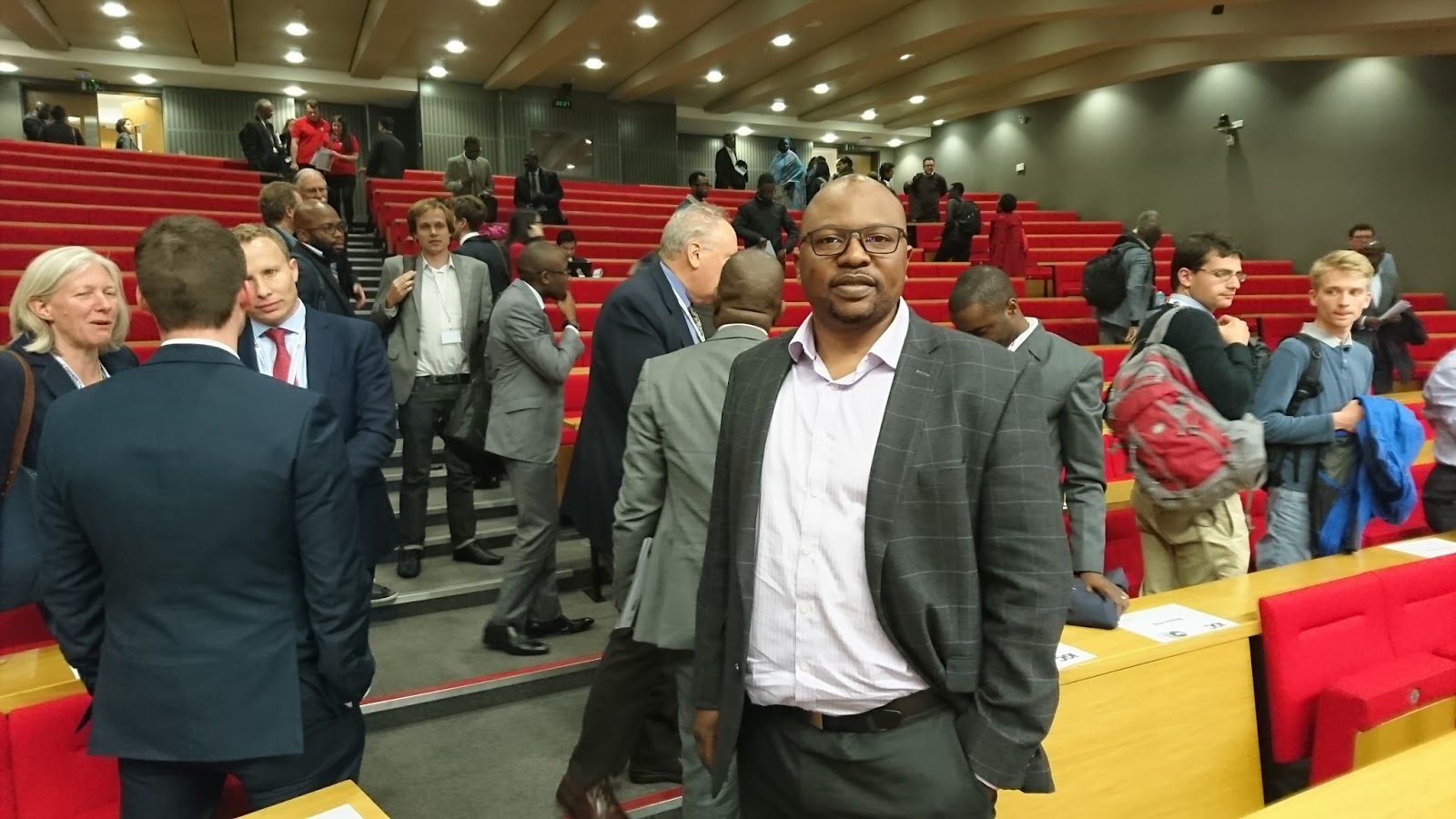
The Comrades at LSE. Industrial Development - Africa and China. LSE June 2016.


If a conference, lecture, or discussion has Africa in the title, my Comrades and I will spare the time (and no expense) to attend. It being a long accepted principle among ourselves that you can never have too much information/knowledge on a subject you care about. We have no other true home but on the African continent and, wherever we may find ourselves to be at present, is in but a transient home. 


Whenever I think about the duty that the African, wherever he or she may be, owes to the continent, my mind always goes back to my reading of Joseph Conrad’s The Heart of Darkness (HoD). The dedication to exploiting Africa that Mr Kurtz and his cohorts in the “Society for the Suppression of Savage Customs” had, in HoD, is the same dedication the African – wherever he/she may be – must have in contributing to Africa’s becoming primus inter pares of the continents.

Of course, I do not say this in the spirit of Pan-Africanism, because I think Pan-Africanism is a very unwieldy and wishy washy concept. The units of analysis that interest me are the African countries (separately) and, the African – wherever he or she may be – must look to contribute to his or her country’s developmental success, which will, in turn, automatically translate to Africa’s developmental success. I do not have to say anything more on this idea as even a child can understand it in the form I have presented it here. 

The Economist who discovered/articulated the concept of scarcity should be awarded a Nobel Prize for Economics every year: such a simple concept, yet it explains a lot. There are so many conferences and discussions with Africa in the title that there is just not enough time to attend them although the will is there. That is scarcity 101 for you right there! It is for this reason that my Comrades and I have had to do something that is the complete antithesis of our constitution: discriminate. It’s un-African to discriminate but we have been forced to choose to go to only the conferences and discussions at the highest ranked institutions and where the highest ranked public speakers are in attendance. It’s a pandering to elitism that I am usually very much against, but you can’t win them all.

With these considerations in mind, we attended the International Growth Centre’s June 2016 public lecture series at the London School of Economics and Political Science. The one we chose was as above stated: Industrial Development – China and Africa. The question to answer in these discussions has always been; can Africa copy the China model and develop in leaps and bounds as China has done in the past 15 years? Forget not that, as recent as 1999, Chinese people were dying in shipping containers while escaping poverty in China as Africans are doing in the Mediterranean Sea at the moment. It is this question of the China model we wanted to get some clues to. Make no mistake, there are no definitive answers in these discussions about complex affairs such as these. You only get some nuggets of information, some clues, and some hypotheses. The best you can hope for is that these nuggets will come in handy at some appropriate time. 

I have rambled on, let me get to the point of this blog entry, which is: what was said at the Industrial Development – China and Africa Public Discussion. A lot was said and some of the things completely escaped me because you can only understand the things that can be processed by your frame of reference. I went wanting to know why Zimbabwe and Mozambique haven’t “strong armed” China into developing the Port at Beira and the road and rail link to Harare into an international standard facility. Beira is very near to Harare, just 284 miles,compared to Durban’s 830 miles and Walvis Bay’s 1127 miles. I got my answer to that question, but it will need a whole separate blog entry to discuss that answer. 

The one thing that made me really sit up and listen was when one Economist touted the possibility that Africa could now become China’s sweat shop as China was the world’s sweat shop in its development. It is now possible, and necessary, for China to outsource its manufacturing to Africa as its present affluence means that it is no longer cost effective to manufacture goods in China. The same economist went on to say that Ethiopia could have 318 000 jobs created as a result of this outsourcing, these are mouth-watering numbers compared to the just 114 000 people Ethiopia currently employs in its manufacturing sector. The trick for the African governments is to be aware of this possibility, then create conditions that allow for the manufactured goods to be transported across borders without much delay. The benefit to the African governments is that they will have an employed population (tax base) and the knowledge and skills transfer that comes with such a venture. In time, and with affluence, these African countries will also look to make places like Europe their sweat shops once it is no longer cost effective to manufacture goods in the African countries. Of course, a China expert also talked about the problems of the China model, but that is a discussion for a whole separate blog entry and a different day.


Industrial Development - Africa and China. LSE June 2016.

Industrial Development - Africa and China. LSE June 2016.


Industrial Development - Africa and China. LSE June 2016.

Industrial Development - Africa and China. LSE June 2016.

Industrial Development - Africa and China. LSE June 2016.


Industrial Development - Africa and China. LSE June 2016.


Tuesday, 20 October 2015

The Tyrannical Character (as desribed as long ago as the 5th Century by Plato).

The Republic
A Synopsis Of Plato’s The Republic

Plato's The Republic is widely acknowledged as the cornerstone of Western philosophy. Presented in the form of a dialogue between Socrates and three different interlocutors, it is an inquiry into the notion of a perfect community and the ideal individual within it. During the conversation other questions are raised: what is goodness; what is reality; what is knowledge? The Republic also addresses the purpose of education and the role of both women and men as 'guardians' of the people. With remarkable lucidity and deft use of allegory, Plato arrives at a depiction of a state bound by harmony and ruled by 'philosopher kings.' 

PART IX, BOOK VIII, IMPERFECT SOCIETIES. 

The Tyrannical Character 

Its essential similarity to the criminal 

... ... “There do indeed.”


“In this struggle don’t the people normally put forward a single popular leader, whom they nurse to greatness?”


“Yes, as a rule.”


“Then it should be clear,” I said, “that this leadership is the root from which tyranny invariably springs.”

“Perfectly clear.”

“Then how does the popular leader start to turn into a tyrant? Isn’t it, clearly, when he starts doing what we hear about in the story about the shrine of Zeus Lykaeus in Arcadia?”

“What is the story?”

“That the man who tastes a single piece of human flesh, mixed in with the rest of the sacrifice, is fated to become a wolf. Surely you’ve heard the tale?”

“Yes, I have.”

“The same happens with the popular leader. The mob will do anything he tells them, and the temptation to shed a brother’s blood is too strong. He brings the usual unjust charges against him, takes him to court and murders him, thus destroying a human life, and getting an unholy taste of the blood of his fellows. Exiles, executions, hints of cancellation of debts and redistribution of land follow, till their instigator is inevitably fatally bound either to be destroyed by his enemies, or to change from man to wolf.”

“That is an inevitable necessity.”

“It is he who leads the class war against the owners of property.”

“It is.”

“And if he’s exiled, and then returns in spite of his enemies, he returns a finished tyrant.”

“Obviously.” ... ...

... ... ... “Meanwhile there’s clearly no question of our champion ‘measuring his towering strength in the dust’; he overthrows all opposition and grasps the reins of state, and stands, no longer champion, but the complete tyrant.”

“That’s the inevitable conclusion,” he agreed.

“Then shall we describe the happy conditions of this man, and of the state in which a creature like him is bred?”

“Yes, please, let us.” 

“In his early days he has a smile and a kind word for everyone; he says he’s no tyrant, makes large promises, public and private, frees debtors, distributes land to the people and to his own followers, and puts on a generally mild and kindly air.”

“He has to.”

“But I think we shall find that when he has disposed of his foreign enemies by treaty or destruction, and he has no more to fear from them, he will in the first place continue to stir up war in order that the people may continue to need a leader.”

“Very likely.”

“And the high level of war taxation will also enable him to reduce them to poverty and force them to attend to earning their daily bread rather than to plotting against him.”

“Clearly.”

“Finally if he suspects anyone of having ideas of freedom and not submitting to his rule, he can find an excuse to get rid of them by handing them over to the enemy. For all these reasons a tyrant must always be provoking war.”

“Yes, he must.”

“But all this lays him open to unpopularity.”

“Inevitably.”

So won’t some of the bolder characters among those who helped him to power, and now hold positions of influence, begin to speak freely to him and each other, and blame him for what is happening?”

“Very probably.”

“Then if he is to retain power, he must root them out, all of them, till there’s not one man of consequence left, whether friend or foe.”

“That’s obvious.”

So he must keep a sharp eye out for men of courage or vision or intelligence or wealth, for, whether he likes it or not, it is his happy fate to be their constant enemy and to intrigue until he has purged them from the state.”

“A fine kind of purge,” he remarked.

“Yes,” I returned, “and the reverse of a purge in the medical sense. For the doctor removes the poison and leaves the healthy elements in the body, while the tyrant does the opposite.”

“Yes it seems inevitable, if he’s to remain in power.”

“He is compelled to make the happy choice,” I said, “between a life with companions most of whom are worthless and all of whom hate him, and an inevitable death.”

“That is his fate.”

... ... .... 

... “But we are digressing,” I said. “We must go back to what we were saying about our tyrant’s ... . How is he going to maintain the changing ranks of this splendid and motley gang?”


“Obviously he’ll use any temple treasures there are, so long as they last, and the property of his victims. That will enable him to tax the people less.”

“And when these sources fail?”

“Then he and his gang, boy-friends and girl-friends, will live on his parents’ estate.” 

“I see,” I said. “You mean that the people who have bred him will have to maintain him and his crew.” 

“They will have no option.” 

“No option,” I said. “But what if they get annoyed and say that it’s not right for a father to keep his son when he’s grown up - it’s the son who should keep the father: and that they never intended, when they bred him and set him up, that when he grew great they should be enslaved by their own slaves, and have to keep him and his servile rabble; on the contrary, he was to be their champion and free them from the power of the wealthy and so-called upper classes? What if they then order him and his partisans to leave the country, like a father ordering his son out of the house with his riotous friends?”


“Then,” said he with emphasis, “people will find out soon enough what sort of beast they’ve bred and groomed for greatness. He’ll be too strong for them to turn out.”


“What?” I exclaimed. “Do you mean that the tyrant will dare to use violence against the people who fathered him, and raise his hand against them if they oppose him?”

“Yes,” he said, “when he has disarmed them.”

“So the tyrant is a parricide,” said I, “and little comfort to his old parent. In fact, here we have real tyranny, open and avowed, and the people find, as the saying is, that they’ve jumped out of the frying pan of subjection to free men into the fire of subjection to slaves, and exchanged their excessive and untimely freedom for the harshest and bitterest of servitudes, where the slave is the master.”

“That is exactly what happens.”

“Well,” I said, “I think we can fairly claim to have given an adequate description of how democracy turns to tyranny and what tyranny is like.”

“I think we can.”


The Tyrannical Character
Notes: 

Plato. (2007) The Republic. Translated by Desmond Lee. London: Penguin Books. pp 298 - 308.

Friday, 28 August 2015

President Robert Mugabe's 2015 State of the Nation Address

President Robert Gabriel Mugabe. The Commander-in-Chief of the Zimbabwe Defence Forces.
The story is told of the (improbable) encounter between five blind men and an elephant (possibly sedated). Whatever part of the elephant each person came across became his view of what an elephant was really like. The one who held the trunk thought it was a like a thick rubbery hose, the one who held the leg thought it was like a tree trunk or pillar, while the one who held the tail thought it was like a rope. 

The story does not explicitly say this but I assume they all agreed that it was an animal. I hope they did. It is the same with our recently delivered State of the Nation Address. We must all agree that the state of affairs in Zimbabwe are not ideal at all. But, beyond this agreement, we can become like the 5 blind men and highlight different things in the address owing to our 'contact,' prejudices, world views, and levels of understanding. Thus, I beg to differ with anyone who has ever uttered, written or thought that the State of the Nation address was a pointless exercise.

What President Mugabe mentioned almost in passing in this speech, is for me the fundamental issue. He mentioned the fact that the security services have ensured that there is peace and security in the most trying of circumstances. Everything must build on this foundation of security. A passage by John Stuart Mill is instructive as to how impossible it is to achieve anything where there is no security. I am well aware that security has since been broadened to include economic, climatic, personal and political security in the 21st Century, but still, all these aspects of Human Security depend on there being peace in a given territory.