Showing posts with label Bulawayo. Show all posts

Tuesday, 20 February 2018

“Zimbabwe After The Robert Mugabe Era”

“If snakes didn’t bite, they would be used to tie firewood” - Cameroonian Proverb.

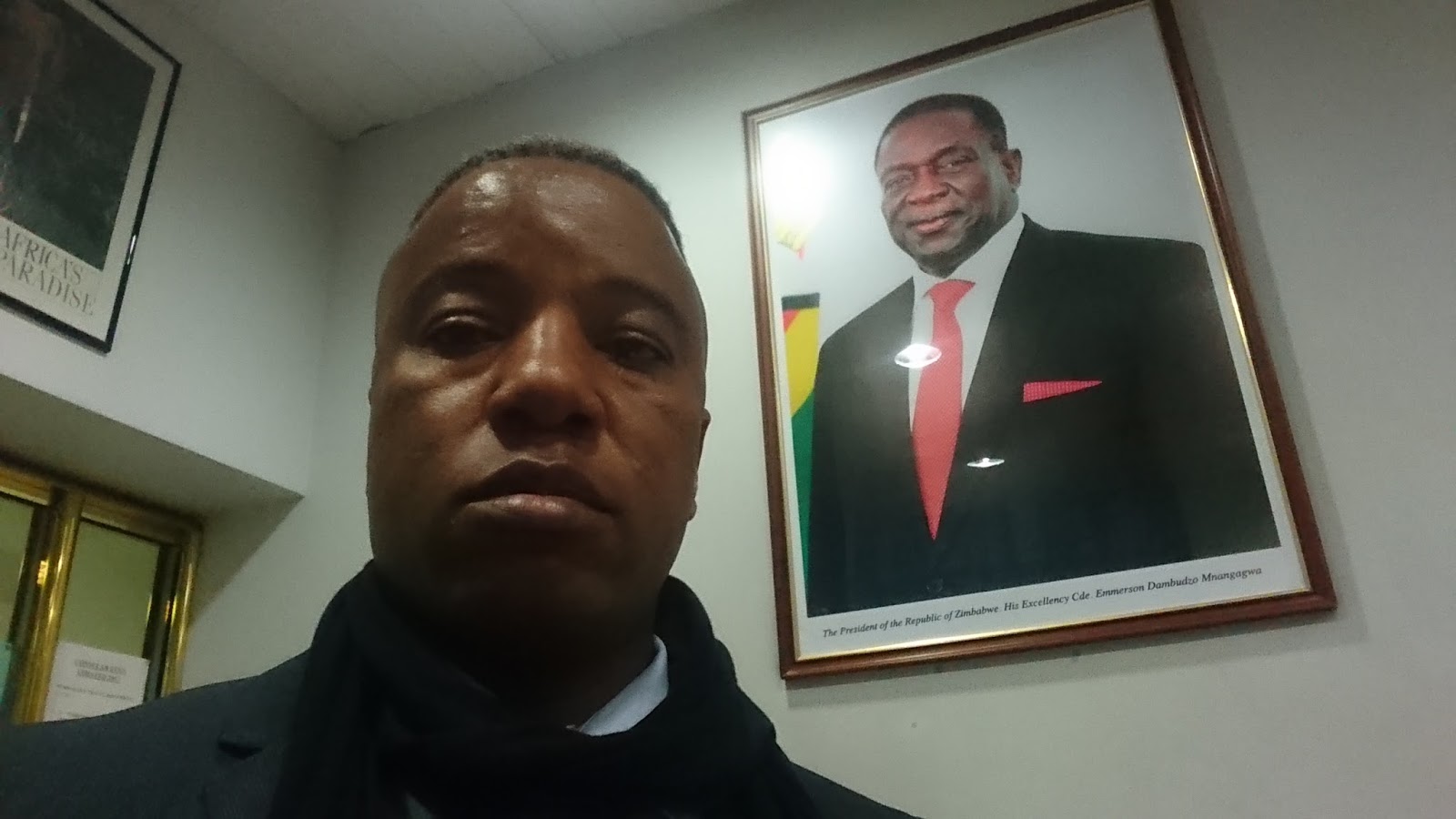
President Emmerson Mnangagwa. The President of the Republic of Zimbabwe.
by Kudakwashe Kanhutu

Against my better judgement, I attended the lecture of the above title at the School of Oriental and African Studies on 19th February 2018. I was in the area anyway, doing other things, so thankfully, I didn’t go out of my way too much. I am afraid this was an opinionated discussion not worthy of academia. I will not, like Plutarch before me (The Malice of Herotodus), go into a point by point refutation of all the false premises that were raised in this lecture. Instead, I will only say something about the tone of the whole event. The tone, besides being non-academic, was pessimistic, but what pessimists do not realise is this: they actually wish for the things they propagate. To the extent that, if they had the means, they would midwife the scenarios they envision.

But, fortunately, as the Shona saying goes: “Kuhukura kwembwa hakutadzise Nzou kufamba” (“the barking of dogs does not prevent elephants from travelling along their paths”), the practitioner does not have the luxury of the armchair-know-it-all, he must act whatever the odds. Even more fortunately, if you were to read what these so called experts who led the discussions yesterday wrote, prior to the current Zimbabwean government taking over, you will find that they have always been off the mark. Theory has its limits. It's at that limit that the genius practitioner takes off and thrives.

Arriving at the School of Oriental and African Studies.
The President of the Republic of Zimbabwe.

Wednesday, 1 June 2016

Zvakaipei Kutoodza Tsika Dzevamwe/Is It Necessarily Bad To Copy Foreign Customs?


“Kana tsika nemagariro evanhu vakasiyana siyana dzikaunganidzwa panzvimbo imwe chete, mumwe nemumwe anotora tsika nemagariro enyika yake, sezvo vanhu vese vachifunga kuti dzavo tsika dzakanaka kukunda dzevamwe vese” – VaHerodotus, Nhoroondo Dzepasi Chigare.

Uyo mubvunzo wandabvunza pamusoro apo uyo wakauya mupfungwa dzangu mwedzi wapfuura, sezvo ndakwanisa kufunga nezvawo kwemwedzi wese, mhinduro ndave nayo. Vazhinji vanoteedzera zvandinonyora paFacebook pangu vanoziva kuti ndiri pakati pekunyora bhuku rangu pamusoro petsika nemagariro evanhu vemuZimbabwe. Mubhuku iri ndirikuda kunyatsocherechedza kuti ndione kuti tichiri kuchengetedza tsika dzedu here, uye takasiyana papi mumagariro edu nevanhu vedzimwe nyika. Bhuku rangu parinopera, richakwanisa kuudza avo vachateera kumashure kwedu kuti vanhu veZimbabwe vanobvepi, vanoendepi, uyezve ndevapi vanokodzera kunzi vana veZimbabwe. Pamusoro peizvozvi, richadzidzisa vanhu kuti ndedzipi tsika dzakakodzera kuchengetedzwa uye ndedzipi dzakakodzera kuraswa sezvo dzinenge dzisisafambirane nenguva.

Nekuti handisi kuda kurembesa munamato sadza richiripora pano apa, ndichangoti ga ga pakudaira mubvunzo wandabvunza pamusoro apo uyo. Bhuku rangu rinoshoropodza mauyiro akaita vachena munyika yeZimbabwe, asi parinosiyana nevatongi vedzimwe nyika vanoshoropodza kuuya kwevachena zuva nezuva asi ivo vachiteedzera tsika dzevachena, pamwe chete ipapo vachinyara tsika dzedu dzechitema ndepekuti, rinoti; hazvisi zvese zvakaunzwa nevachena zvakashata. Chakashata chete mauyiro avo. Aya haasi mashoko angu aya, mashoko avaCesaire pavainyora Nhoroondo Yavo Yemauyiro eVachena kuAfrica. VaCesaire vanoti ivo vanhu vega vega vanoda kusangana nevamwe kuti vadzidzisane zvinhu zvakasiyana siyana zvinenge zviri zvitsva kwavari. Ivo vachena vacho vakakwanisa kubudirira nekuti vaifamba munyika dziripedyo navo vachiteedzera zvakanaka zvavainge vasina munyika dzavo. Dai vakauya pahushamwari kuAfrica, ropa rakawanda ringadai risina kumbo deuka.

Kuti ndinyatsopindura mubvunzo wangu regai ndikupei mufananidzo uyu: handizive kana makaverenga here bhuku rinonzi Mapatya. Mapatya ibhuku rinoti pasi chigare kwaiti kukazvarwa mapatya, vanhu vaiti zvinoshura munhu kuzvarwa vana vaviri, saka mwana mumwe chete aitourayiwa kosara mumwe chete chete. Regai ndibva ndangokuudzai kuti iyi ingori ngano, hazvireve kuti ndozvaiitika zvechokwadi, asi chidzidzo chatinogona kuwana ipapo chakakosha zvakadaro. Ngatitii vamwe vanhu vedunhu rakavakidzana neredu vobva vangokwanisawo kuziva kuti chii chaicho chinokonzera kuti mapatya azvarwe, vosiya tsika iya yekuuraya mumwe chete wemapatya – poshaya shura rinoitika kwavari - vakatishanyira vakatitsanangurira magariro avavakuita kubva pavakaziva izvi, isu tinogona kuteedzera tsika yavo yavave kuita zvisinga kanganise kana chinhu chimwe chete pamagariro edu. Zvishoma izvozvo zvandataura izvi zvinofanirwa kutiudza kuti hazvina kuipa kuteedzeera tsika nemagariro evamwe akanaka kana pasina zvakaipa zvinobva zvawira vanhu vemunyika medu patinoteedzeera zvekunze izvi. Zvinhu zvatinenge tateedzera kubva kunze zvinofanirwa kuti zvingoitwa kuti zvive zvinoenderana nezvimwe zvakanaka zvinenge zviri mutsika nemagariro edu nekare.

Is It Necessarily Bad To Copy Foreign Customs?

“For if one should propose to all men a choice, bidding them select the best customs from all the customs that there are, each race of men, after examining them all, would select those of his own people; thus all think that their own customs are by far the best”- Herodotus, The Histories.

The above question occurred to me about a month ago, as I have had a full month to think it over, I also now have an answer for that question. As many who have seen my Facebook posts are well aware, I am in the middle of writing my own book. My own book interrogates what it means to be Zimbabwean, interrogates our national identity and how we are distinctly different from people from other countries. On completion, my book will inform posterity on our origins, our future and on who has the right to claim to be Zimbabwean. Moreover, my book will locate Zimbabwe’s place in the international system in such a manner that Zimbabweans will know where exactly to draw their red lines against encroachment by the forces of globalisation (in all spheres).

For brevity’s sake I will just answer the question I asked above without taking the circuitous route. Although, in essence, my book is a nationalist’s playbook, it differs from politicians’ rhetoric in that it is sober in its assessment of the impossibility of maintaining pure identities, customs and cultures. The mixing of cultures was inevitable, what was wrong about it was how the white cultures imposed themselves in Africa. These are not my own words but those of Cesaire when he wrote his A Discourse on Colonialism. In that discourse, Cesaire maintains that contact between civilisations is the oxygen that keeps civilisations alive, he only says that Colonialism was not the best way of making contact. He also points out that Europe's polities developed by learning from others who were in close proximity. The Renaissance and Enlightenment being typical examples. A different kind of contact between Europe and Africa would have spared so much bloodshed.


To answer my above posed question with imagery, let me give you this example; I don’t know if you read the Shona book, Twins. In this book, the birth of twins was thought of a something foreboding doom, and that doom could only be averted if one of the twins was killed soon after birth. I do not need to tell you that Twins is a work of fiction and that this did not necessarily happen in a particular epoch, still an important lesson can be drawn. Suppose a neighbouring people finds out, by trial and error, that no doom will descend on the people because both twins were allowed to live, and suppose these people visit us and tell us this, we can easily adopt their way of doing things without any cost to our polity. This is my whole point, that we can adopt other people’s customs as long as they do not ruin our people. What we will adopt from foreigners will then just be streamlined and adapted to go along with the great customs we already have.

I still have not settled on a book title.

Monday, 28 March 2016

The Origins Of Zimbabwe's Defeatist National Psyche

"Religion is regarded by the common people as true, by the wise as false, and by the rulers as useful" - Lucius Annaeus Seneca.


“God has done his will.” Have more defeatist words ever been uttered?

In Part I of this thread, I gently suggested that the Zimbabwean national psyche is largely defeatist, and I also promised to explain to you why this is the case. The case I was building against Zimbabweans was that they do not interrogate cause and effect as much as they should. I have been confounded lately by the propensity, of otherwise sane Zimbabweans, to believe the most ridiculous speculations by their so-called prophets. I remember returning home from one of my long absences to be told by my grandparents that their “prophet” had said that, because of his prayers, the floods that inundated Mozambique were prevented from reaching us. Now, my grandparents come from a different era. So, I just told them that it may also just have been because Harare is so far from Maputo and the Indian Ocean that the floods did not reach us. 

The other generations beside our grandparents, however, cannot get away lightly considering that the country spent money it didn’t have to make sure we all got an education. What is education but the ability to interrogate cause and effect better? To be sure, the lessons and thought patterns inculcated in us by our grandparents have an impact upon us. Don’t forget I am not happy that Zimbabweans held national prayers for rain when the science is clear how El Nino works. Forget not, also, that sane and well educated people are subscribing to the aforementioned so-called prophets and their “judgement nights” whose predictions never come true. Remember, esteemed reader, the silly promises of “miracle money” and “anointed oils” and the large crowds they draw among Zimbabweans. The mind boggles! 

But why are we like this? Could childhood socialisation be such an all-powerful force that can counteract any classroom education? Surely the refusal to interrogate cause and effect must have its roots in what we were made to believe is the way the world works when we were pre-school age. If I were to reduce what we internalised as children to just one statement, it will have to be: “Mwari vaita kuda kwavo/God has done his will.” This was the ubiquitous statement in every household in every part of the country. What undergirds this statement is a belief in predetermination. It does not matter what positive actions you do to change your situation, if God does not will it, it will not happen. Has a more defeatist idea ever been propagated to a whole nation? 

Now, there is a whole philosophical debate here about manifest destiny, freewill etc which I have no space to go into. Instead, it is my observation that this ubiquitous statement – God has done his will – has made the Zimbabwean psyche very pliable: anyone who invokes God can make the most ludicrous proposal and a Zimbabwean will entertain that idea. “God has done his will” is a good statement to console the grieving, but as a foundation for action it lends a whole nation susceptible to defeatism.

Friday, 28 August 2015

President Robert Mugabe's 2015 State of the Nation Address

President Robert Gabriel Mugabe. The Commander-in-Chief of the Zimbabwe Defence Forces.
The story is told of the (improbable) encounter between five blind men and an elephant (possibly sedated). Whatever part of the elephant each person came across became his view of what an elephant was really like. The one who held the trunk thought it was a like a thick rubbery hose, the one who held the leg thought it was like a tree trunk or pillar, while the one who held the tail thought it was like a rope. 

The story does not explicitly say this but I assume they all agreed that it was an animal. I hope they did. It is the same with our recently delivered State of the Nation Address. We must all agree that the state of affairs in Zimbabwe are not ideal at all. But, beyond this agreement, we can become like the 5 blind men and highlight different things in the address owing to our 'contact,' prejudices, world views, and levels of understanding. Thus, I beg to differ with anyone who has ever uttered, written or thought that the State of the Nation address was a pointless exercise.

What President Mugabe mentioned almost in passing in this speech, is for me the fundamental issue. He mentioned the fact that the security services have ensured that there is peace and security in the most trying of circumstances. Everything must build on this foundation of security. A passage by John Stuart Mill is instructive as to how impossible it is to achieve anything where there is no security. I am well aware that security has since been broadened to include economic, climatic, personal and political security in the 21st Century, but still, all these aspects of Human Security depend on there being peace in a given territory.