Showing posts with label Colonialism. Show all posts

Tuesday, 20 February 2018

“Zimbabwe After The Robert Mugabe Era”

“If snakes didn’t bite, they would be used to tie firewood” - Cameroonian Proverb.
President Emmerson Mnangagwa. The President of the Republic of Zimbabwe.
by Kudakwashe Kanhutu

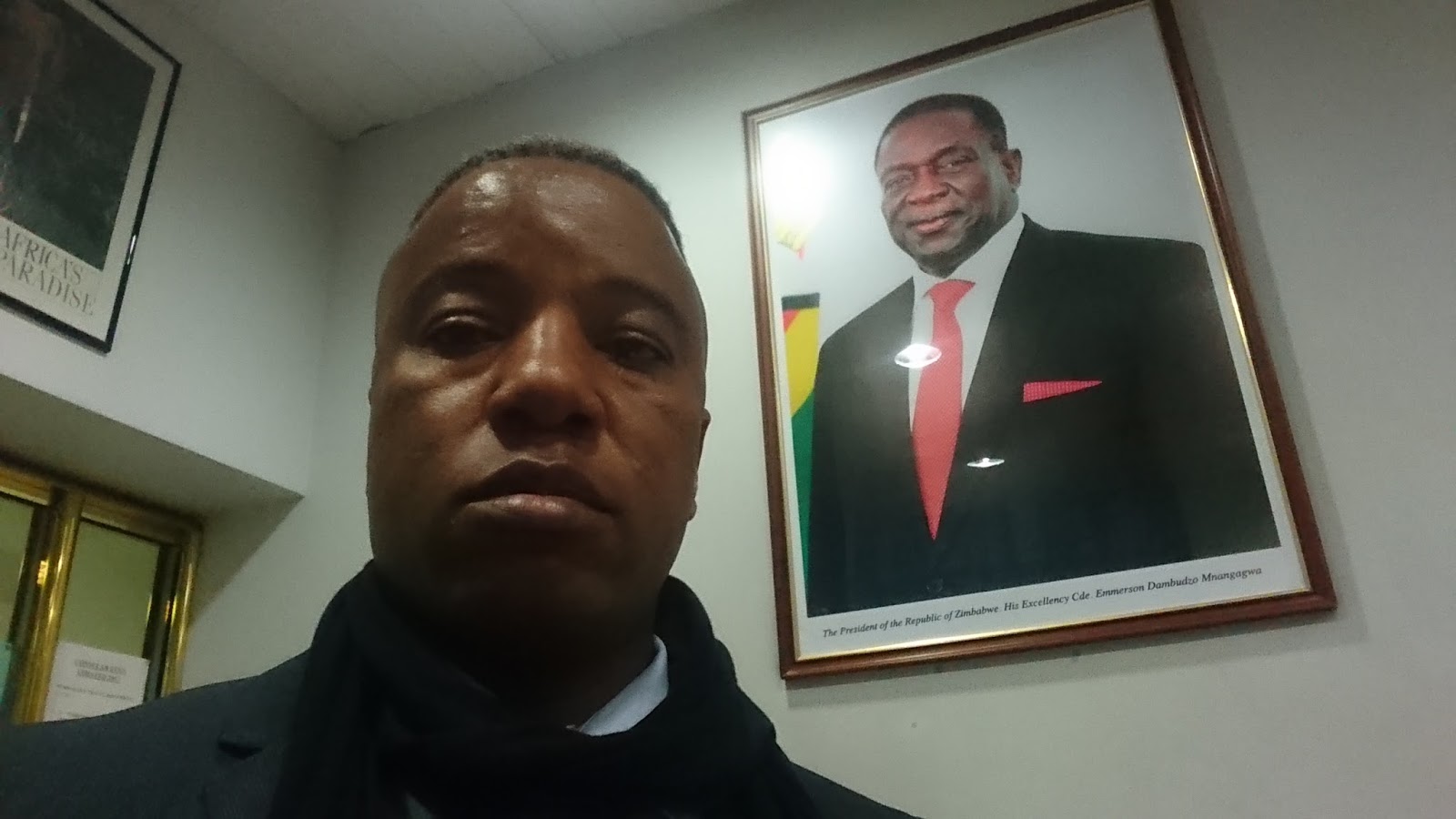
Against my better judgement, I attended the lecture of the above title at the School of Oriental and African Studies on 19th February 2018. I was in the area anyway, doing other things, so thankfully, I didn’t go out of my way too much. I am afraid this was an opinionated discussion not worthy of academia. I will not, like Plutarch before me (The Malice of Herotodus), go into a point by point refutation of all the false premises that were raised in this lecture. Instead, I will only say something about the tone of the whole event. The tone, besides being non-academic, was pessimistic, but what pessimists do not realise is this: they actually wish for the things they propagate. To the extent that, if they had the means, they would midwife the scenarios they envision.

But, fortunately, as the Shona saying goes: “Kuhukura kwembwa hakutadzise Nzou kufamba” (“the barking of dogs does not prevent elephants from travelling along their paths”), the practitioner does not have the luxury of the armchair-know-it-all, he must act whatever the odds. Even more fortunately, if you were to read what these so called experts who led the discussions yesterday wrote, prior to the current Zimbabwean government taking over, you will find that they have always been off the mark. Theory has its limits. It's at that limit that the genius practitioner takes off and thrives.

Arriving at the School of Oriental and African Studies.
The President of the Republic of Zimbabwe.

Saturday, 28 November 2015

The Land Question Is Zimbabwe's ONLY National Question


The condition of the black farm worker in Zimbabwe between 1893 - 2000
On this issue I cannot prevaricate as all academics do: a country's national question is that question which when resolved satisfactorily, will cause all other questions to resolve themselves. If you resolve the land question - once and for all - everything else will fall into place. Of course, when a crisis has gone on long enough, it's easy to forget the initial condition and thus mistake a concomitant question for the actual national question i.e. mistaking the shadow for the substance. It is also easy to - with hindsight - think there was a better way of doing things and, by so doing, revise history. 

Speaking at Oxford University, the Commander in Chief of the Economic Freedom Fighters of South Africa - Julius Malema - accused President Robert Mugabe of being an opportunist who only used the land issue as a way to hold on to power when he was falling out of favour in Zimbabwe. Julius Malema then went on to say that land reform could have been done through changing the constitution instead of the extra-legal and violent way it was conducted in Zimbabwe. In this postulation he revises history as, indeed, the legal means were tried (to no avail) and he also fails to realise that land law is not really a sovereign issue - by which I mean, outside forces can frustrate any attempts to enshrine land reform in national constitutions:

Video: Whose Land Is It Anyway


The condition of the black farm owner 2000 - present

Friday, 20 November 2015

Africa Imported The Wrong State

Importing the wrong state.

The argument of "The Imported State" restated, in the fewest possible words, is that Africa imported the wrong State. The operational concept being that every society has an organic way of organising its political life that best fits it (given its values) - there is no one size fits all.

This idea, when diagrammatically represented would be this: the foundation of the State in Africa is circular (round), yet the superstructure it has been sent is in the shape of a square. Thus the imported state will never take root in Africa.

Wednesday, 29 July 2015

Britain Does Not Owe Zimbabwe Reparations

Balancing Rocks, Harare, Zimbabwe.
The speaker in this video argues that Britain does not owe any reparations to the countries it colonised as it was welcomed in most of those countries. The prime example of this welcome, according to him, is that; "Sometimes they showed humility, King Lobengula of the Matabeles famously started his first loyal address to Queen Victoria with the words; 'we who are but as lice on the edge of Her Majesty's blanket.'" 

Such condescending attitudes and conceit.