Showing posts with label Development. Show all posts

Sunday, 26 November 2017

Fate Has Given Zimbabwe's New President The Easiest Of Tasks!

Mr President! Comrade Emmerson Mnangagwa, Zimbabwe's New President.
by Kudakwashe Kanhutu

For me, my President's task is very simple, to do only those things that are defensible as being in Zimbabwe's (objective) Nationalist Interest. Zimbabwe's National Interest, too, cannot be divorced from Zimbabwe's foundational story - the Chimurenga War Story.

For the outsider who wishes to engage with Zimbabwe, your task is simple too - engage in a way that is defensible as advancing Zimbabwe's (objective) National Interest.

I cannot think of anything simpler.

Sunday, 12 June 2016

Industrial Development – China and Africa IGC Public Discussion at the LSE: What Was Said

"You can learn from anyone, even your enemy" - Ovid, Roman Poet. 

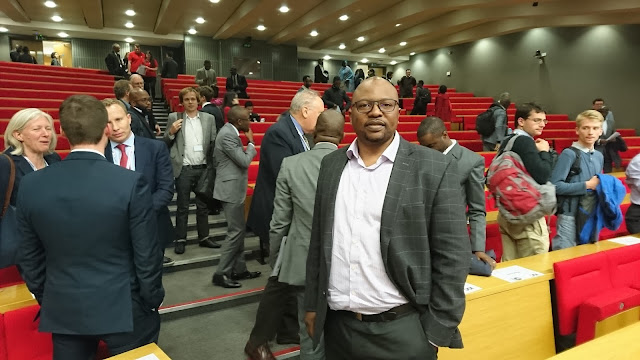
The Comrades at LSE. Industrial Development - Africa and China. LSE June 2016.


If a conference, lecture, or discussion has Africa in the title, my Comrades and I will spare the time (and no expense) to attend. It being a long accepted principle among ourselves that you can never have too much information/knowledge on a subject you care about. We have no other true home but on the African continent and, wherever we may find ourselves to be at present, is in but a transient home. 


Whenever I think about the duty that the African, wherever he or she may be, owes to the continent, my mind always goes back to my reading of Joseph Conrad’s The Heart of Darkness (HoD). The dedication to exploiting Africa that Mr Kurtz and his cohorts in the “Society for the Suppression of Savage Customs” had, in HoD, is the same dedication the African – wherever he/she may be – must have in contributing to Africa’s becoming primus inter pares of the continents.

Of course, I do not say this in the spirit of Pan-Africanism, because I think Pan-Africanism is a very unwieldy and wishy washy concept. The units of analysis that interest me are the African countries (separately) and, the African – wherever he or she may be – must look to contribute to his or her country’s developmental success, which will, in turn, automatically translate to Africa’s developmental success. I do not have to say anything more on this idea as even a child can understand it in the form I have presented it here. 

The Economist who discovered/articulated the concept of scarcity should be awarded a Nobel Prize for Economics every year: such a simple concept, yet it explains a lot. There are so many conferences and discussions with Africa in the title that there is just not enough time to attend them although the will is there. That is scarcity 101 for you right there! It is for this reason that my Comrades and I have had to do something that is the complete antithesis of our constitution: discriminate. It’s un-African to discriminate but we have been forced to choose to go to only the conferences and discussions at the highest ranked institutions and where the highest ranked public speakers are in attendance. It’s a pandering to elitism that I am usually very much against, but you can’t win them all.

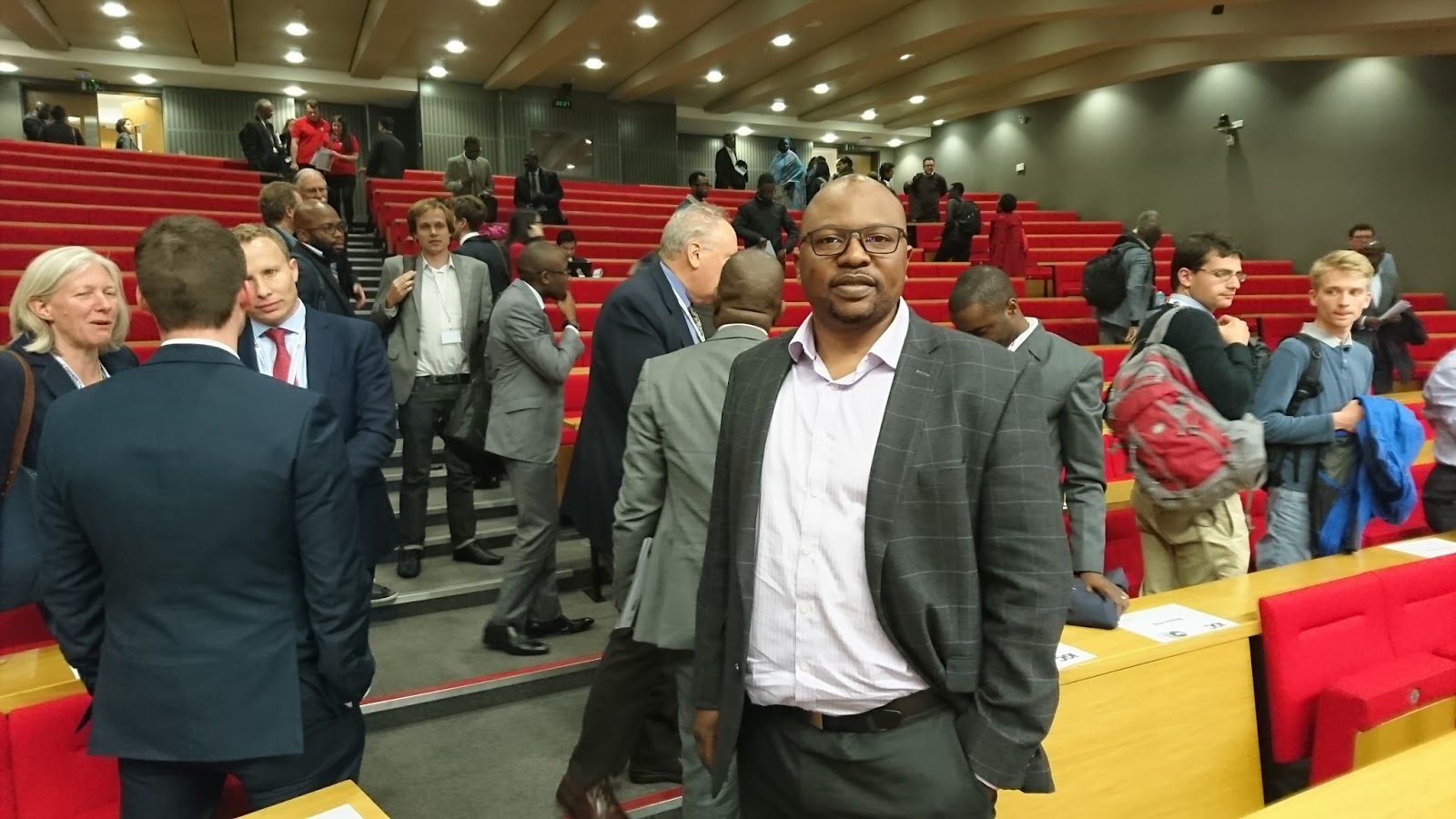
With these considerations in mind, we attended the International Growth Centre’s June 2016 public lecture series at the London School of Economics and Political Science. The one we chose was as above stated: Industrial Development – China and Africa. The question to answer in these discussions has always been; can Africa copy the China model and develop in leaps and bounds as China has done in the past 15 years? Forget not that, as recent as 1999, Chinese people were dying in shipping containers while escaping poverty in China as Africans are doing in the Mediterranean Sea at the moment. It is this question of the China model we wanted to get some clues to. Make no mistake, there are no definitive answers in these discussions about complex affairs such as these. You only get some nuggets of information, some clues, and some hypotheses. The best you can hope for is that these nuggets will come in handy at some appropriate time. 

I have rambled on, let me get to the point of this blog entry, which is: what was said at the Industrial Development – China and Africa Public Discussion. A lot was said and some of the things completely escaped me because you can only understand the things that can be processed by your frame of reference. I went wanting to know why Zimbabwe and Mozambique haven’t “strong armed” China into developing the Port at Beira and the road and rail link to Harare into an international standard facility. Beira is very near to Harare, just 284 miles,compared to Durban’s 830 miles and Walvis Bay’s 1127 miles. I got my answer to that question, but it will need a whole separate blog entry to discuss that answer. 

The one thing that made me really sit up and listen was when one Economist touted the possibility that Africa could now become China’s sweat shop as China was the world’s sweat shop in its development. It is now possible, and necessary, for China to outsource its manufacturing to Africa as its present affluence means that it is no longer cost effective to manufacture goods in China. The same economist went on to say that Ethiopia could have 318 000 jobs created as a result of this outsourcing, these are mouth-watering numbers compared to the just 114 000 people Ethiopia currently employs in its manufacturing sector. The trick for the African governments is to be aware of this possibility, then create conditions that allow for the manufactured goods to be transported across borders without much delay. The benefit to the African governments is that they will have an employed population (tax base) and the knowledge and skills transfer that comes with such a venture. In time, and with affluence, these African countries will also look to make places like Europe their sweat shops once it is no longer cost effective to manufacture goods in the African countries. Of course, a China expert also talked about the problems of the China model, but that is a discussion for a whole separate blog entry and a different day.


Industrial Development - Africa and China. LSE June 2016.

Industrial Development - Africa and China. LSE June 2016.


Industrial Development - Africa and China. LSE June 2016.

Industrial Development - Africa and China. LSE June 2016.

Industrial Development - Africa and China. LSE June 2016.


Industrial Development - Africa and China. LSE June 2016.


Monday, 18 January 2016

Of Prayers for Rain, “Judgement Nights” and “Miracle Money” - Part I

At a research day at Oxford University

I attended a discussion at the Overseas Development Institute in London where the former Nigerian Finance Minister – Ngozi Okonjo-Iweala - was speaking about her tenure in Nigeria. It was a very enlightening discussion and her explanation of the methods she used to fight corruption and vested interests in Nigeria deserves a separate paper of its own. I only mention this discussion because it was at this event that I met a strategist from Oxford University specialising on the politics of Southern Africa. She had just returned from Zambia so I asked her – without hiding that I thought it was ridiculous – what all that business of praying for rains was about? She, of course, not being of Zambian extraction, had to be politically correct, so said this was in tune with the expectations of the man in the street. Which is to say, the majority of Zambians did not think, like I do, that it was a monumental waste of time to pray for rain when the science is clear what has caused this delay

Little did I know that prayers for rains were coming to my own beloved Zimbabwe and, the man on the street would also be gratified that such “positive” “action” had been taken by the government. What’s next? We are going to start praying to get parking spaces next to the store entrance every time we go shopping? Does the bible not caution against praying for frivolous things? There is also an element of deception to the timing of the prayers for rain. I noticed that in Zimbabwe the day for prayers was called when Al Jazeera weather report had already predicted rainfall. Still, this is not the crux of the problem, the problem is that there is a significant number of our countrymen who subscribe to these prayers for rain when the historical record clearly shows there is a pattern to El Nino. This is a terrible misunderstanding of cause and effect.

As the Malawians also had national days of prayer for rain, I do not think the leaders are unaware of the science, instead, they are just doing what they know their constituents will respond positively to. The President of Malawi is a man of science – a Professor – so is his Vice President. Zimbabwe’s leaders are very well educated and, if they so choose, could actually teach a graduate course on El Nino. The fault here lies in civil society (it is civil society that has chosen to believe that the crowing of the cockerel causes the sun to rise). The way for me to explain why this is the case involves me having to go back to my childhood so as to talk about the lessons we learnt from our parents and grandparents. I will then show you why school education could not easily uproot what we internalised as children. Then I will go on to talk about the essence of the national psyche in Southern Africa and the dangers inherent in such a psyche. All this I will do in Part II and Part III as my new thing on this blog, is to make very brief and accessible entries each time.

Talking to a strategist who works on Politics in Southern Africa recently.

Wednesday, 13 January 2016

Why I Ran In 2016?

“If you are planning for a year, sow rice; if you are planning for a decade, plant trees; if you are planning for a lifetime, educate people" - Chinese Proverb.


For all my study of Greek political thought, I couldn’t tell you who predates the other, Sophocles or Aristotle? I only mention this because the point I want to rely on in this blog entry, was made by both authors, yet I cannot decide who was reaffirming the other. Sophocles said call no man happy until he is dead, while Aristotle went even further and said; even if a man lives an excellent and happy life, we cannot call him happy either if his offspring fall into ruin after his death.

This tells me that it is not advisable for any mortal to claim to have the right formula for an excellent life. So, although what I am doing this 2016 is inspired by my own childhood experiences, I know it is only one of the possible pathways to excelling in life. I do not claim to be living the happiest possible life either or, even, to be in the vicinity of my goals in life. What I do claim, instead, is that I am satisficing, by which I mean I am heading in the general direction of those goals. 

What started me off in the general direction of my goals is that, growing up in rural Zimbabwe, my Grandfather had a thick volume Who’s Who among his very few books. Reading what other people had achieved must have sowed the idea in my mind to emulate their pathways. It is this start in life, I wish for every one of my rural countrymen. 

Now, the circuitous introduction I have put up above is only meant to support one idea and one idea only: access to books and knowledge must make for a happier life than living in ignorance. It is with this idea in mind that I have decided to make all my Marathons and Half Marathons in 2016 to be in aid of raising money to send books to rural areas in Zimbabwe. 

My Grandfather - John Kanhutu. Later, I will tell you about the social compact he had with President Mugabe and, my place in that compact.

Thursday, 24 December 2015

They Serve God Too, Those Who Act Rather Than Just Pray.

They serve God too, those who act rather than just pray.

That I do not reaffirm my Christian faith as often as I should is remiss, but, sufficiently excused by this passage recited by that Honourable and Ingenious Knight of antiquity; Don Quixote of La Mancha. Summed up, his argument is this; they serve God too, those who act rather than just pray.

"For, if the truth is to be told, the soldier who executes what his captain orders does no less than the captain himself who gives the order. My meaning, is, that churchmen in peace and quiet pray to Heaven for the welfare of the world, but we soldiers and knights carry into effect what they pray for, defending it with the might of our arms and the edge of our swords, not under shelter but in the open air, a target for the intolerable rays of the sun in summer and the piercing frosts of winter. 

Thus are we God's ministers on earth and the arms by which his justice is done there in. And as the business of war and all that relates and belongs to it cannot be conducted without exceeding great sweat, toil, and exertion, it follows that those who make it their profession have undoubtedly more labour than those who in tranquil peace and quiet are engaged in praying to God to help the weak" - Don Quixote: The Ingenious Gentleman of La Mancha.

They serve God too, those who act rather than just pray.

Wednesday, 12 August 2015

Applying "Swarm Theory" To Zimbabwe's Re-Development Agenda

This concept above by Ben Zweibelson for the Canadian Military Journal (CMJ) illustrates how a traditional hierarchical organisation works. For our purposes, development projects should be done at the tactical level without necessarily being directed from the operational or strategic levels.  

The dimensions and implications of "Swarm Theory" are elegantly explained in this article here, and could easily be applied to Zimbabwe's re-development agenda - provided there are sufficient dedicated adherents. I have taken the tenets of Swarm Theory to mean, for what I have in mind, Zimbabweans using their talents and expertise to develop their rural areas relying neither on foreign sponsored NGOs nor State funds/approval. There are excellent reasons for this approach which I will list in later instalments when I come round to explaining the feasible prospective projects. For now I must list the hurdles this course of action must encounter.

Swarm Theory, for all its elegance and promise, must falter on the differences observed by Thomas Hobbes as to why the selfless cooperation that occurs in the animal kingdom cannot be replicated in human affairs. He noted; "Some man may perhaps desire to know, why mankind cannot do the same (Swarm behaviour). To which I answer, first, that men are continually in competition for honour and dignity, which these creatures are not; and consequently amongst men there ariseth on that ground envy and hatred... Secondly, that amongst these creatures, the common good differeth not from the private, and being by nature inclined to their private, they procure thereby the common benefit. But man, whose joy consisteth in comparing himself with other men, can relish nothing but what is eminent. Thirdly, that these creatures, having not (as man) the use of reason, do not see, nor think they see any fault, in the administration of their common business: whereas amongst men, there are very many, that think themselves wiser, and abler to govern the public, better than the rest; and these strive to reform and innovate, one this way, another that way; and thereby bring it into distraction."